
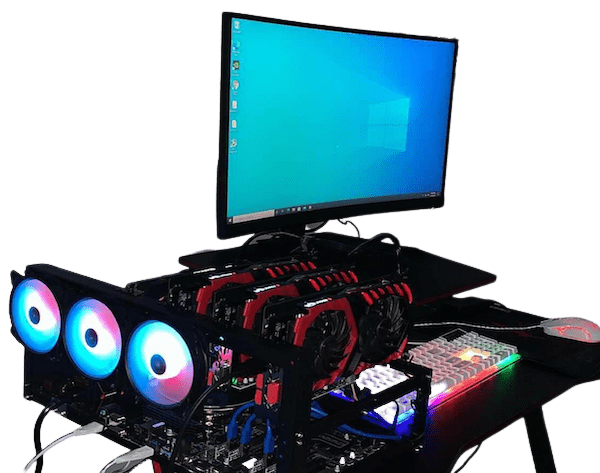
The PC hardware market is experiencing one of its most significant periods of price inflation in years. After several years in which faster processors, larger SSDs, and more powerful graphics cards generally became more affordable over time, that trend has reversed. Rising PC component prices are affecting everything from memory and storage to graphics cards, motherboards, and complete workstations.
For businesses, researchers, AI developers, content creators, and other professionals planning a workstation purchase, waiting for prices to fall may no longer be the best strategy. Current industry forecasts suggest that component costs could remain elevated over the next several quarters and, in some categories, into 2027.
At Custom Lux PCs, we are working to keep professional and AI workstations affordable despite these market conditions. Our custom-built systems are frequently 10–20% less expensive than comparable workstations from major competitors while providing the same or better performance.
Why Are PC Component Prices Increasing?
One of the biggest factors behind rising PC component prices is the enormous expansion of artificial intelligence infrastructure. AI data centers require massive quantities of GPUs, DRAM, NAND flash storage, servers, power equipment, and other hardware.
This demand is competing directly with traditional PC and workstation manufacturers for many of the same underlying components.
Memory has been hit particularly hard. TrendForce forecast conventional DRAM contract prices to increase another 13–18% quarter-over-quarter in Q3 2026, with NAND Flash prices expected to increase approximately 10–15% during the same period.
The longer-term outlook isn’t necessarily better. Industry forecasts indicate that tight DRAM supply could continue into 2027 as demand growth continues to outpace new supply.
RAM and SSD Prices Are Under Heavy Pressure
RAM and SSDs have historically been components where customers could expect more capacity for their money every few years. The current market has turned that expectation upside down.
Gartner estimated that the combined cost of DRAM and SSD storage could rise approximately 130% by the end of 2026 compared with 2025, contributing to an estimated 17% increase in overall PC prices.
This has major implications for professional workstations.
AI and machine-learning systems commonly require 128GB, 256GB, 512GB or even 1TB+ of system memory, while professional workloads increasingly demand multiple terabytes of high-speed NVMe storage. Even relatively small increases in price per gigabyte can therefore add hundreds or thousands of dollars to a high-end workstation.
For customers considering these configurations, rising PC component prices can have a much greater impact than they would on an entry-level desktop.
GPU Prices Are Increasing Too
Graphics cards are another major concern.
High-performance NVIDIA GPUs are essential for local AI, machine learning, rendering, engineering, scientific computing, video production, and other GPU-accelerated workloads. Unfortunately, GPU pricing has also been moving upward.
During August 2026, median U.S. pricing for several NVIDIA RTX 50-series graphics cards increased significantly. Some models saw increases of more than 25%, while certain configurations increased by nearly 40%.
AI infrastructure is adding further pressure to the market. Demand for accelerators and high-bandwidth memory remains enormous, while manufacturers must allocate production capacity between consumer GPUs, professional GPUs, and extremely profitable data-center products.
For customers looking at RTX 5090, RTX PRO, multi-GPU, and other high-performance systems, rising PC component prices make efficient workstation configuration more important than ever.
The Effects Go Beyond RAM, SSDs and GPUs
The problem isn’t limited to a few components.
Modern computers depend on an enormous supply chain that includes processors, memory chips, NAND flash, PCBs, power-delivery components, cooling hardware, copper, power supplies, cases, and hundreds of smaller components.
As AI infrastructure expands globally, demand throughout this supply chain continues to increase.
That means rising PC component prices can eventually affect nearly every part of a workstation.
For professional buyers, the total cost of an equivalent system could therefore be noticeably higher several quarters from now than it is today.
Custom Lux PCs Is Focused on Affordable High-Performance Workstations
Despite increasing hardware costs, Custom Lux PCs remains committed to providing affordable professional and AI workstations.
Rather than forcing customers into a limited selection of standardized configurations, we build systems around the customer’s actual workload. This allows us to prioritize components that improve real-world performance while avoiding expensive upgrades that provide little practical benefit.
Our workstations are often 10–20% less expensive than comparable systems from major workstation manufacturers and competing custom PC companies, while delivering equivalent or better performance.
That price difference becomes particularly significant on high-end systems.
On a $10,000 workstation, a 10–20% difference represents $1,000–$2,000 in potential savings. On a $20,000 multi-GPU AI workstation, the difference can represent $2,000–$4,000.
Our goal isn’t simply to build the least expensive computer possible. It is to provide the best performance per dollar while using quality components appropriate for professional workloads.
AI Workstations Are Becoming More Important
Interestingly, the same technology driving rising PC component prices is also making powerful local workstations increasingly valuable.
Businesses and researchers are deploying local AI systems for large language models, inference, machine learning, data analysis, software development, image generation, scientific research, and other workloads.
A properly configured local AI workstation can provide substantial computing capability without requiring every workload to be sent to a cloud provider.
Custom Lux PCs offers configurations ranging from powerful single-GPU desktops to dual-GPU and multi-GPU AI workstations with high-core-count AMD Ryzen, Threadripper, Threadripper PRO, and Intel processors.
Should You Buy a Workstation Now or Wait?
There is never a guarantee about future hardware pricing. New products can arrive, demand can change, and supply conditions can improve.
However, current industry forecasts provide little evidence that a major across-the-board reduction in PC hardware costs is imminent.
For businesses and professionals who already know they will need additional computing capacity, rising PC component prices are an important factor when deciding whether to purchase now or postpone an upgrade.
Waiting several quarters could mean paying more for essentially the same level of performance.
At Custom Lux PCs, we will continue working to keep high-performance workstations affordable regardless of where the hardware market goes next.
Whether you need a professional desktop, AI workstation, multi-GPU system, or fully customized computing solution, our focus remains the same: maximum performance, quality components, and competitive pricing without the massive premiums commonly associated with high-end workstation manufacturers.